Spring, TX Self-Defense for Women: condition1combat.com self defense classes That Empower
Safety training should feel useful right away, not theoretical. When women walk into a self-defense class, they bring real lives with them, from late shifts at Houston Methodist Willowbrook to dusk jogs along Spring Creek Greenway. They need skills that work in the parking lot behind H‑E‑B as surely as they do in a matted gym. That practical lens guides the women’s self-defense approach at Condition 1 Combat Center in Spring, where classes are built around scenarios locals actually face, taught by instructors who understand both technique and context.
This piece explains what effective training looks like in practice, how self defense classes at condition1combat.com structure progression, and why thoughtful instruction matters as much as solid technique. If you are choosing between programs, you will find tangible markers that separate confidence theater from training that truly changes outcomes.
Why women’s self-defense must be its own curriculum
Women have different threat profiles, different social scripts to navigate, and often different size and read more strength matchups. A curriculum that simply shrinks a coed martial arts syllabus rarely serves them. You do not need tournament combinations, and you certainly do not need acrobatic takedowns to survive a grab at a car door. You need a small toolkit you can recall under pressure, calibrated to common attacks: wrist and clothing grabs, hair pulls, choke attempts, body pinning, and harassment that starts as verbal probing and escalates to cornering.
Effective women’s classes focus on leverage, structure, and intention, not on meeting force with more force. Palm-heel strikes beat clenched fists for many students because they protect the small bones of the hand. Elbows and knees are easier to land when adrenaline spikes. Rotational body movement breaks grips better than arm strength. This is not theory. It is how real bodies move when heart rates jump and fine motor control drops.
What sets the Condition 1 approach apart
Condition 1 Combat Center’s women-focused sessions emphasize situational chains, not one-off tricks. You learn to disrupt a grab, strike decisively, and create safe space to move. The plan is simple by design, but it does not stop at drills in straight lines. Instructors stage problem-solving runs, like getting from a “store entrance” cone to a “car door” pad while a partner tries to stall or redirect you. Winded, out of breath, you practice verbal boundary setting and movement decisions while managing fatigue. It feels a lot like life.
Students cycle through work that toggles between technical reps and short realistic bursts. One moment you are grooving a hip turn for power. The next, the lights dim and a coach plays an insistent stranger, crowding you with “Just a second, can I ask you something?” You work distance with your feet, put your hands up in a nonthreatening frame, and stay tactically polite until it is time to stop being polite. That “soft front, hard back” balance is crucial, particularly for women who have been socialized to preserve harmony even when their instincts say something is off.
What a first month typically looks like
In the first four to six weeks, most students build a single reliable pattern. Think of it as your everyday carry: a short list of movements that work from several positions. At condition1combat.com self defense classes, that often includes:
- A hands-up, palms-out stance that asserts boundaries while protecting head and neck.
- A break from wrist or clothing grabs using rotation and body drop, not arm strength.
- A burst combination of palm strike, elbow, and knee, aimed at face and midline.
- A frame-and-turn escape from a wall pin, moving toward daylight rather than back into pressure.
- A habit of moving after impact, not admiring the strike, to open a path to a door or public line of sight.
The exact details flex with a student’s size, mobility, and comfort. A 5'2" nurse with wrist issues might prefer an eye-line palm and knee, while a former college athlete might use a heavier shoulder bump to create space. What matters is that each person leaves class with a plan they can remember when nothing goes as planned.
The conversation piece: words that protect you
Technique without verbal skills leaves a gap. The first stage of many confrontations is conversation. You get questions that demand engagement: “Can I borrow your phone?” “Do you know what time it is?” The goal, in training and in public, is to own your space without pouring fuel on a stranger’s ego. Instructors at Condition 1 practice scripts that fit a Houston-area parking lot at 9 p.m. While keeping you mobile. “I can’t help you” paired with a step to the side and a palm-out gesture gives you both time and geometry.
Role-play in class strips the sting out of doing this for the first time. Students practice loud, practiced phrases, then quieter, firm ones, and learn to recognize pre-assault cues: grooming gestures, scanning for witnesses, closing distance with a fake question, angling to the blind side. This is where prevention and physical defense knit together.
What to bring to your first class
- Comfortable workout clothes and clean athletic shoes you can move in.
- A water bottle and a small towel, because short bursts add up quickly.
- A hair tie or headband, and a spare if you tend to lose them.
- Any braces or supports you already use for knees, wrists, or ankles.
- A notebook or notes app, to capture the after-class checklist that helps retention.
A quick note on gear: If you continue, you will likely add light gloves and perhaps a mouthguard for contact drills. The gym provides pads and shields. You do not need specialized equipment to start.
Safety, consent, and trauma-informed coaching
Good programs understand that many students arrive with history, from harassment to assault. A trauma-aware classroom gives opt-out language and clear contact boundaries without singling anyone out. In practice, that looks like instructors asking, “Are you okay with head contact in this drill?” and offering technique alternatives that achieve the same outcome. It also looks like calibrated intensity. Coaches shift to slower motion while building new patterns, then layer speed and pressure once a student owns the movement.
Students control the throttle. That autonomy builds capability far faster than one-speed-fits-all coaching. It also keeps injuries low. Most class sessions leave everyone tired but not wrecked. Soreness is normal, pain is feedback, and coaches adjust.
Legal awareness that maps to Texas
No self-defense course replaces legal counsel, but a baseline understanding of Texas law helps you make smarter choices. In broad strokes, Texas Penal Code Chapter 9 allows force to stop an imminent unlawful use of force against you, and it does not require retreat if you have a legal right to be where you stand. Lethal force has stricter limits. What matters practically is match and necessity. You are trained to use enough force to stop the threat and then get to safety, not to punish someone.
Classes at Condition 1 do not turn students into lawyers. They keep the focus on real-time decisions: where your exits are, how quickly a situation is escalating, and when it is time to move. One simple habit, drilled often, is a brief verbalization after a strike: “Back off.” It signals intent and can help bystanders perceive what is happening.
Conditioning without the macho filter
Women’s sessions do include conditioning, but it is not a prove-you-are-tough gauntlet. If you cannot control your breath, you cannot control your hands. Expect short intervals that mimic the burst and scramble of a real encounter. Ten to twenty seconds of work feels more like a hallway scuffle than a 5K. Over a month, most students notice two changes: they recover faster between drills, and their strikes land with more structure because legs and hips are doing the heavy lifting.
The point is capability, not punishment. Coaches track progress with simple metrics: how fast you can move off a wall pin, how consistently you break a grip, whether your non-dominant side keeps up. Those measures matter more than a scale or a stopwatch.
An honest take on size and strength
Technique shrinks strength gaps, but it does not erase physics. Good coaching addresses the reality without fatalism. When weight and leverage are stacked against you, your best moves usually happen early. That is why the skill stack emphasizes preemption. If a stranger grabs your wrist and tries to pull you off balance, your window is wide for the first half second. Rotating into the line of the thumb, striking, and stepping off the rails keeps you in the driver’s seat. If the fight goes to the ground, the strategy changes to frames, hips, and making space to stand, not to play bottom guard like a jiu-jitsu tournament.
Condition 1 instructors cross-train in grappling and striking, so they can give you options without turning class into sport. As you progress, you will sample ground escapes, but they never eclipse the core objective: break free and leave.
Stories from the mat that travel to the parking lot
One of the most common turning points for new students is their first surprise drill. A teacher I worked with, early thirties, had drilled the elbow-knee combo until she could do it without thinking. During a scenario, a coach pinned her lightly against a mock wall while another coach played the chatty “lost my car” angle. She hesitated until coached to use her voice. The moment she heard herself say, “Stop right there,” her elbows came alive. After the session she said the voice was the switch. Physical skills matter, but command presence buys you half the fight.
Another student, a nursing assistant who parks behind a medical building off FM 2920, practiced key management until it was muscle memory. No more digging in a bag with her head down. She carries the keys in hand as she walks, not clenched in a fist, but threaded between fingers facing inward so they do not slip. Her improvement was not a knockout punch. It was time regained, attention up, and a straight path to her car door with a look over the shoulder while unlocking from the side. Boring on paper, powerful in practice.
How women’s self-defense connects to broader training
Condition1combat.com martial arts classes include more than one track. Many women start with a dedicated self-defense block, then add a fundamentals striking class or an introduction to grappling. Cross-training smooths your movement and expands options, but only if taught through a self-protection lens. A round kick drilled for pad speed becomes a shin kick to a thigh or knee when footwear and jeans enter the mix. A jiu-jitsu hip escape turns into a stand-up-and-run sequence.
If you have children, the gym’s family-friendly schedule makes consistency easier. I have watched moms wrap up a women’s block while their kids finish Condition 1 Combat Center kids martial arts next room over. That routine keeps both generations on the mat. Kids learn boundary skills and listening under motion. Parents get their hour without a long commute to The Woodlands or downtown Houston.
Choosing a credible program in Spring
Marketing can make any school look tough. What matters is what happens at 7 p.m. On a Tuesday. When you visit, look for coaching that fits you, not just the coaches. Ask how they adjust for injuries, how they measure progress, and where scenario training shows up in the calendar. Watch one drill, then ask a student why they are doing it. If they can explain the why without reciting jargon, you are likely in good hands.
Smart questions to ask any self-defense program in Spring:
- How do you bridge from compliant drills to realistic resistance without risking injury?
- What specific scenarios do you practice that reflect local environments, like parking lots, rideshare pickups, or apartment breezeways?
- How do you incorporate verbal boundary setting and pre-assault cue recognition?
- If I have a prior injury or a trauma history, how will you adapt drills for me?
- What does a three-month progression look like, and how will you know I am improving?
If the answers feel concrete, you have a helpful filter. If you hear only “We make you tough,” keep looking.
What a typical class arc feels like
Walk in, warm up your joints, then expect ten minutes of stand-up movement: footwork, head coverage, and hip turns. Next comes a technique focus, often one or two movements strung into a short sequence. You will repeat them under light coaching until they feel clean, then you will run them against varying speed and pressure. The last third of class often switches to scenarios. Maybe it is a cornering drill around pads that simulate parked cars. Maybe it is a mock elevator chute. While the format changes, the purpose does not: make decisions while stressed, then move.
Coaches finish with a debrief and a short at-home drill. Two minutes a day of wall strikes or footwork around a coffee table adds up. Over time, students who stick to this small habit retain skills far better than those who only train once a week.
How kids and teens fit into the safety picture
Kids’ programs are more than cartwheels and lines. Condition 1 Combat Center kids martial arts uses age-appropriate games to build balance, coordination, and listening, then layers simple boundary phrases and breakaway moves. When a teen daughter joins a women’s session later, the shared vocabulary helps at home. Families practice what to do when someone follows you from the food court, or how to move together from a theater to the car. You do not rehearse fear; you rehearse options. That distinction keeps practice empowering instead of anxiety-inducing.
For teens in Spring and Klein, evening sessions leave time for homework and band practice. Coaches understand school sports schedules, which makes it easier to keep momentum during football or track season.
Adult martial arts, without losing the self-defense thread
Some women use self-defense classes as a gateway to deeper training. If that is you, Condition 1 Combat Center adult martial arts training offers structured paths. In striking, you will refine footwork, learn combinations that translate to self-protection, and spar under rules that emphasize control. In grappling, you will explore escapes and positional strategy, with a coach always available to translate sport into safety: when to disengage, where the risk of multiple opponents changes your choices, how clothing and footwear shift grips.
The key, for both programs, is preserving the self-defense priority. Not every round kick belongs in skinny jeans. Good coaches say that out loud. They teach the art and the filter.
Costs, time, and real-life logistics
Most Houston-area programs price monthly memberships with tiers for one or multiple classes per week. Women’s self-defense workshops sometimes run as short series in addition to ongoing classes. Ask about trial classes, and be wary of long contracts you cannot reasonably test first. Expect a mix of evening and weekend slots, with morning options added when demand is consistent.
Parking is usually easy around Cypresswood and FM 2920, but give yourself extra time for the first visit. Showing up flustered robs you of focus. If you can, arrive ten minutes early, meet your coach, and tell them any mobility limits. You do not earn points for suffering through knee pain.
Training frequency and what progress really looks like
Two sessions a week is a sweet spot for many busy students. If you can manage only one, pair it with short home practice. The first month is about building a baseline. By month three, most women carry their stance into daily life without thinking. They set firmer boundaries with strangers who crowd their space. They move a little differently through parking lots, finding the right lane between hypervigilance and obliviousness.
Progress also looks like recovery after a scare. One Spring resident told me she recognized a pre-assault “interview” near her apartment staircase. She disengaged early, moved to light, and kept her voice, but still shook for twenty minutes afterward. Old her would have blamed herself for the adrenaline spike. Training taught her that shaking is normal physiology, not failure. That reframe is a win.
Integrating tools without overreliance
Personal alarms, flashlights, and pepper spray can help, but only if you practice access and deployment. In class, you can drill the motion of retrieving a light or a spray from a consistent pocket, framing with the off hand, and moving while you use it. Tools are force multipliers, not substitutes. If you have never pressed your alarm in a parking lot with hands full of groceries, try it once. Note which finger needs to find the button without your eyes.
The same principle applies to phone safety. If you must take a call while walking, use earbuds and keep your eyes up. A short phrase to a friend, “Walking to my car, hang on,” beats an in-depth conversation that erases your awareness. These details might feel small. They are not.
The role of community
Classes work best when they build a circle of accountability. Students text each other about Tuesday attendance, swap notes on a tricky drill, and share small victories, like clearing a boundary with a pushy coworker. The tone at Condition 1 Combat Center martial arts classes is professional and friendly, not performative. New students see a range of ages, body types, and backgrounds. That matters. Skill grows faster when you recognize yourself in the room.
The gym’s staff keeps communication practical: weather closures, seminar dates, and what the next block will cover. When a guest instructor comes in to run a scenario day focused on rideshares or travel safety, you will know a week or two ahead so you can plan for it.
Red flags that signal a poor fit
A brief word on what to avoid. If an instructor dismisses questions with a joke, look elsewhere. If classes escalate to hard contact without measured steps, injuries will follow. If every answer is “just hit them,” you are not getting a complete education. The best programs respect fear without feeding it, teach power without swagger, and coach choices rather than rigid scripts.
Where condition1combat.com fits in your decision
If you search self defense classes condition1combat.com, you will see an outline of programs that include dedicated women’s sessions and paths into broader training. The value lies in the continuity. You can start with a focused self-protection block, then fold in striking or grappling through martial arts classes Condition 1 Combat Center offers, all without losing the throughline of real-world application. For families, kids martial arts Condition 1 Combat Center programs build complementary habits at home. For adults who want deeper skill, adult martial arts training Condition 1 Combat Center integrates conditioning, technique, and scenario awareness in a way that tracks back to safety, not just sport.
Final thoughts from the training floor
Empowerment is the word most often used for women’s self-defense, but it only means something when tied to actions you can perform under pressure. The students who change their outcomes do a few things consistently. They practice a simple plan until it shows up automatically. They rehearse words that buy them space. They build movement habits into daily routines. They choose a school that respects their lives outside the gym and measures progress in decisions made, not just pads hit.
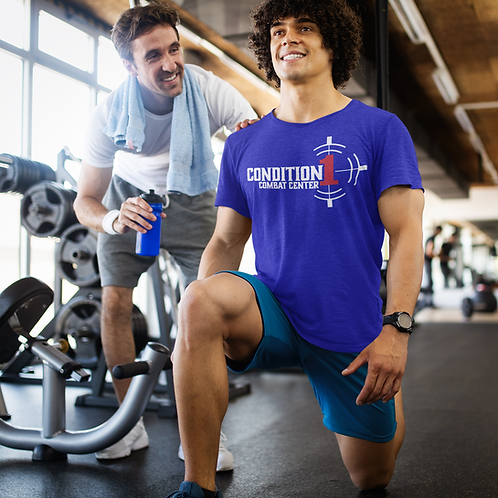

Spring has a strong training culture, from recreational runners on the Greenway to parents looking for effective kids programs. Condition1combat.com martial arts classes add to that landscape with instruction that keeps its promises. Visit, watch, ask better questions, and trust how a room feels when you walk in. The right class will meet you where you are, then take you somewhere new.
Corrections
Spot something wrong? Send it to the desk and it gets fixed in the open.