Meet the Coaches at MMA Gym Condition 1 Combat Center
Walk into Condition 1 Combat Center and the first thing you notice is the rhythm of a room that knows what it is doing. Leather on pads, short cues that cut through the noise, and coaches who move with the economy of people who have put in their 10,000 hours, then kept going. This is a working gym, not a showroom. The staff treats technique like a living thing, and they teach it that way too.
The names on the schedule tell part of the story, but the heart of an mma gym is the coaching staff’s judgment. You feel it in how they scale rounds for a beginner stepping on the mats for the first time, and how they peel back a combination for an amateur who punches too hard too soon. At Condition 1 Combat Center, coaching is built around a tight blend of practical detail, pressure testing, and care for student longevity. That approach runs through the program, whether you come for Brazilian jiu jitsu, muay thai, boxing, wrestling, or self defense.
What follows is a tour of the coaching philosophies you will meet here. If you found this from condition1combat.com because you were searching for a proven mma training environment, consider this your inside look.
The Head MMA Program: Where Structure Meets Adaptation
The head of the MMA program acts as the conductor. Their job is not just to teach mixed martial arts, it is to stitch together the gym’s separate but connected arts into a system you can carry into sparring or competition. At Condition 1 Combat Center, mma training is built on three pillars that show up across the week.
First, positional sparring with clear rules. Instead of throwing people into live rounds without focus, the coach runs short frames from defined situations. Cage wall escapes for three minutes, then a complete reset. Half guard with strikes allowed, but only to the body. Back control with 30 second starts. The goal is to eliminate vague work and replace it with reps that stick.
Second, layered offense and defense. You might learn a jab to double leg entry on Monday, then spend Wednesday dealing with the common counters: a cross check hook, a collar tie and circle, a sprawl to swing behind. Nothing is taught as a one-way street. Defense lives next to offense, and you test both sides.
Third, realistic conditioning that preserves your skill. This is not a bootcamp that ruins your legs before you hit the bag. The coach sets up conditioning inside your skill work. For example, after a cage drill, you hit three explosive doubles on the crash pad, then shadow box at half speed with a focus on breathing, elbows down, and rhythm. Your lungs burn, but the technique holds. That is coaching, not just effort.
When people talk about mma gym Condition 1 Combat Center, they often mention smart pacing. New members go through a fundamentals block that removes risk without removing the real heart of the sport. Sparring is introduced only after students can show the basics of stance, guard, and safe clinch entries. For those who want to compete, the head coach builds a calendar. Fight camp is not a mood, it is a plan with dates, volume, and deload phases.
Brazilian Jiu Jitsu: Details That Age Well
In the BJJ room, the teaching voice is different. Calmer cadence, more hands-on connection, and a strong emphasis on invisible pressure. If you have trained long enough, you can tell a coach’s lineage not by their belt color but by how they talk about frames, levers, and weight transfer. The coaches running Brazilian jiu jitsu training at Condition 1 Combat Center aim to build games that survive tired rounds and bigger training partners.
A common white belt mistake is collecting techniques without context. The jiu jitsu staff counters that by building everything from two core hubs: closed guard and half guard for bottom, mount and back for top. Students learn three attacks and three recoveries from each hub, and they revisit them until the moves feel like a language. During a typical month, the team will rotate a theme like front headlock, then run the same controls across gi and no-gi so students feel how grips translate rather than silo into separate jars.
A short example from a fundamentals evening makes the point. The class starts with a half guard pass series. The coach spends five minutes on a detail that many people never get taught: the angle of your knee line when you staple the far leg. Too high and you float. Too low and the bottom player re-guards with a knee shield. The right angle makes the rest easy. Students drill with a call for 20 controlled reps, then switch to a 60 percent pass-sweep scenario that forces decisions without ego. The round ends in two minutes, the coach blows the whistle, and everyone resets to half guard again. It is technical and calm, but intense enough to change your game by the end of class.
If you are looking at options for a bjj gym in the area and typed condition1combat.com bjj gym into your phone, this is the kind of culture you will find. Practical, repeatable, and safe enough that you can train four to five days per week without leaving your elbows and lower back on the mat.
Muay Thai: Timing First, Power Later
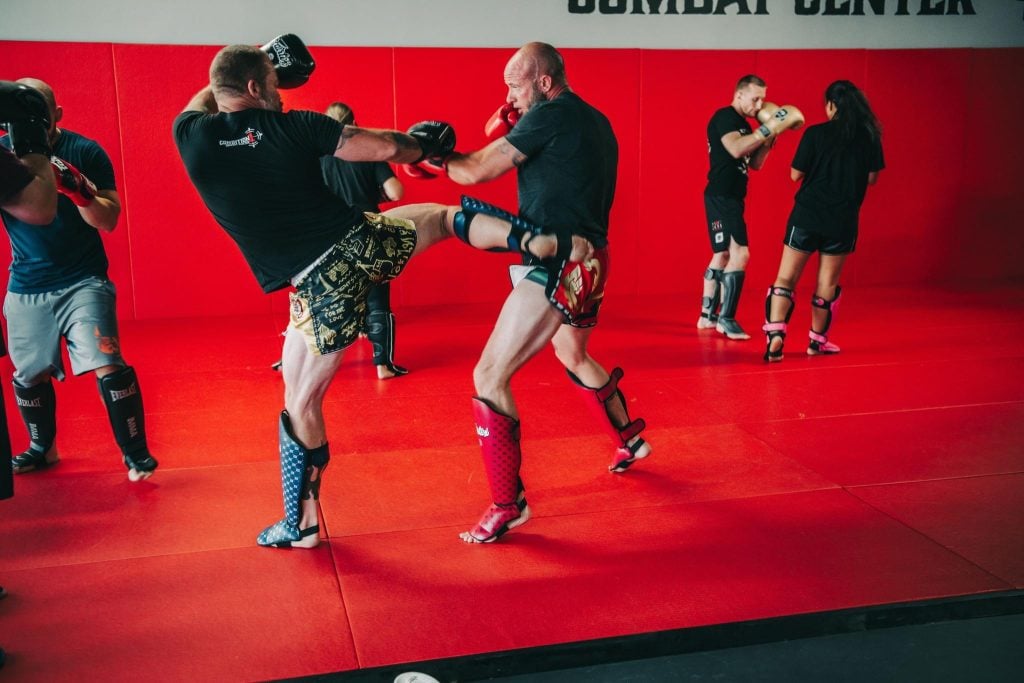
A good muay thai gym knows that kicks and knees win fights as much as hands. The muay thai coaches at Condition 1 Combat Center train timing first. They make students land kicks on the right beat, with shin angle and hip combat center rotation aligned, before the pads go loud. It is common to see a newcomer throwing with less than full power while the coach walks them through footwork, pointing with a glove to show how a single small step changes the line of the body kick. The room prizes balance, turning the hip over without falling through the target, and a clean return to stance.
Clinch work gets the same attention. Many students arrive with little clinch experience. The coach will build from posture, hand fighting, and frames at the neck, then add knees and off balancing later. A standard drill is three seconds of static posture battle, then a whistle and two seconds to attempt a snap down or turn, then reset. It keeps the clinch tactical, not just a wrestling match in gloves.
For anyone searching for Condition 1 Combat Center muay thai gym or a muay thai gym condition1combat.com schedule, expect a steady arc across the week: footwork on Monday, body kicks and checks on Tuesday, elbows and knees on Thursday, with pad rounds and controlled technical sparring sprinkled in. Heavy sparring is rare, and only for those who opt in with proper gear and coach approval.
Boxing: Hands That Set Everything Up
Boxing at an mma gym has one job above all others, to make the hands support the rest of your game. The boxing coaches at Condition 1 Combat Center teach a style that travels well to MMA and kickboxing. That means tall guard when it needs to be, but also head position, level changes, and exits that set up kicks or shots. The double jab to inside low kick is a favorite here, as is the jab to body cross when an opponent overreacts to a level change.
One advantage of working with a boxing staff in an MMA environment is the attention to defense against the fence. The coach will run a round that starts with your back to the cage. Your partner throws at 30 percent while you practice three exits, first on a short L step, then on a frame and circle, then on a fake level change to break the angle. None of this is flashy, but it wins rounds. If you looked up Condition 1 Combat Center boxing gym because you want usable skills, not just bag sweat, this is the room.
A small anecdote illustrates the mindset. A student with a heavy right hand kept loading up in sparring, missing long, then eating counters. Instead of saying stop swinging so hard, the coach cut the round time in half and forced a strict left hand only rule, with a body jab requirement every 15 seconds. At first it frustrated the student. By the end of the week he was landing with both hands because he was no longer chasing power. That is how good boxing coaching feels, it quietly rewires your choices.
Wrestling and the Wall Game: The Quiet Decider
MMA fights are often decided where the wall meets the mat. The wrestling coaches at this gym bring that reality to every week. Rather than running only mid-mat doubles and singles, they anchor lessons in the cage. Students learn to build underhooks, head position, and hip pressure that does not burn them out. On offense, the focus is finishing in tight spaces without giving up easy guillotines. On defense, it is all about getting to your feet efficiently.
One of the most useful sessions here is a six minute block of 20 second sprints with different start positions. Offense starts with a body lock, defense starts with a half underhook and the wall at your back. The whistle forces quick attempts and quick recoveries so students learn to try again without panic. The coaches keep score for fun, but the goal is quality, not just numbers.
The crossover with the BJJ staff shows up too. Wrestlers learn to avoid toast headlocks during sprawls, and jiu jitsu players learn to keep their neck safe while posting up the wall. That is what you get from an integrated mma gym like Condition 1 Combat Center, every discipline makes the others better.
Self Defense That Respects Context
Self defense classes at Condition 1 Combat Center are built on simple mechanics and scenario planning rather than movie scenes. The coaches are careful to address context, environment, and the messy reality of adrenaline. You will not be told that one move fixes all problems. Instead, you will be shown a small set of movements that work under stress, then you will practice them with increasing pressure.
For example, a common module blends boxing and jiu jitsu with situational awareness. It starts with fence posture and verbal boundaries. If distance collapses, you cover with a tight shell and forearm frame to the collarbone, angle off, then leave. If you get grabbed, you bump the hips, control a wrist, and exit to the side rather than muscling straight back. If you end up on the ground, the coaches drill you on standing up without exposing your back while still keeping your eyes up. There is controlled chaos, but never reckless chaos. If you searched condition1combat.com self defense classes because you want tools that you can apply right away, this is what you will train.
How the Coaches Build a Week That Works
A hallmark of this mma gym is how the staff think about the training week. They avoid stacking high impact days back to back for the same group. If Tuesday has hard wall wrestling for the MMA team, Wednesday’s grappling block might be more technical with short rounds and lower intensity. The striking coaches use a similar rhythm, making sure heavy pad days are not paired with hard sparring the next morning. The goal is to keep athletes on the mats consistently because consistency beats heroic single sessions.
They also tag classes by intent. A fundamentals muay thai class is not just easier, it is designed to build habits without noise. An advanced BJJ session might be more about problem solving than collecting new submissions. The MMA team sessions often start on the wall, because fights start in the center and drift to the fence, not the other way around. These are choices coaches make from experience. They study the schedule weekly and make small adjustments so the room stays sharp.

What Beginners Can Expect From Day One
First days can be awkward. The coaching staff removes most of the friction. New students are greeted, given a tour, and slotted into a fundamentals track without being made to feel like they are in the way. Coaches ask about prior athletic history, injuries, and goals, then suggest how often to train and which classes make sense for the first month. There is no push to spar. In fact, most beginners are held back from live sparring until they can keep their hands up, keep their mouth closed with a mouthguard in, and move in stance without crossing their feet.
In BJJ, that first week might include grip basics, guard retention frames, and learning how to tap and reset. In muay thai, stance, base, and two kicks. In boxing, how to jab and bring the hand home. Feedback is specific. Instead of good job, you will hear shoulders down, breathe on the jab, hide your chin behind your shoulder. That kind of cue sticks early and becomes subconscious.
If you came to Condition 1 Combat Center for mma training because you want structure and a clear path, the coaches lay it out in plain terms. The message is simple: show up, train smart, and ask questions.
How the Coaches Handle Sparring and Safety
Sparring is where skill meets reality, but it is also where egos can get people hurt. The staff runs sparring with rules that keep it developmental. Levels are matched, headgear is used when appropriate, and technical sparring with clear targets is more common than full-power rounds. The coaches float, watch, and stop rounds when they see heat rising. It is not a room that celebrates knockouts in the gym. That culture keeps people training for years, not weeks.
For BJJ, positional sparring starts before full rounds. Students roll with a plan, not just to win. The head coach often prompts, today your goal is to get to mount and hold it for 10 seconds twice. If you hit a submission on the way, fine, but do not chase it at the cost of position. That kind of focus builds control, then the submissions come anyway.
Competition Track vs Lifestyle Track
Not everyone wants to fight. The coaches respect that. The gym has two tracks, and both are taken seriously. The competition track is for those who want to test themselves under lights. The lifestyle track is for students training for fitness, confidence, and the satisfaction of learning a hard skill well. The two groups share the room, and the staff keeps the tone welcoming to both.
For competitors, the coaching gets granular. Round counts go up, drilling becomes more specific to the opponent’s tendencies if available, and the coaches hold athletes accountable to nutrition, sleep, and active recovery. For those training for life, the staff sets targets that feel just as real: three classes per week for 12 weeks, learn to check a kick without flinching, learn to escape mount under fatigue. Both tracks build pride, and the coaches celebrate both.
Youth Programs and Family Training
Parents often ask what makes a kids program good. At Condition 1 Combat Center, the youth coaches focus on coordination, attention, and respect before wins. They teach stances, safe falling, and simple grappling positions. They talk to kids in clear language and use short, purposeful games that build the same skills adults use, just scaled down. The staff is careful with contact, introducing it gradually with lots of partner switching so kids learn to work with different body types and personalities.
For families training together, the coaches help align schedules and suggest a balance. For example, a parent might take a boxing fundamentals class while a teenager attends BJJ on the next mat, then they finish with a shared mobility cooldown the coach provides. It sounds small, but these touches make the gym a workable part of a family’s week rather than another stressor.
What Sets the Staff Apart
Every gym says its coaches care. Here, care looks like the small adjustments that keep people training. A coach notices you lace your gloves wrong and fixes it before your wrist gets sore. A BJJ instructor sees you grimacing on a knee cut pass and shows a tiny hip shift that removes the pinch. The wrestling coach remembers you have a desk job and cues you not to crank with your lower back when you dig for an underhook.
It also looks like honest feedback. If you are not ready to move into advanced sparring, they tell you. If you are skipping warmups and it shows in your footwork, they mention it. Respect runs both ways. Students learn to appreciate blunt, useful coaching because it makes them better.
How to Choose Your First Class
New to the gym and not sure where to start? The coaching team suggests a simple approach.
- Pick one striking class and one grappling class in your first week.
- Bring a notebook or use your phone to jot three cues after each session.
- Show up 10 minutes early and stay five minutes after to ask one question.
- Skip sparring until a coach invites you in.
- Commit to two weeks before judging your progress.
These five decisions lower friction and raise your odds of sticking with training. They also make the coaches’ job easier because they get to see you consistently and offer better guidance.
A Sample Week Built by the Coaches
Many prospective members ask what a balanced week looks like when using all the tools of an mma gym like Condition 1 Combat Center. Here is a practical version for a beginner to intermediate student. Adjust for your schedule and recovery.
- Monday: BJJ fundamentals, 60 to 75 minutes, focus on half guard.
- Tuesday: Muay thai fundamentals, 60 minutes, light pad rounds and defense.
- Wednesday: Rest or mobility work, 20 to 30 minutes at home.
- Thursday: Boxing fundamentals, 60 minutes, footwork and jab variations.
- Saturday: MMA foundations or wrestling for MMA, 60 to 90 minutes, no hard sparring.
This plan builds both sides of the game and leaves you fresh enough to enjoy it. The coaches can tune it up or down based on your goals.
Practical Notes on Gear and Hygiene That Coaches Actually Care About
Good coaching includes culture setting, and culture shows up in details. The staff here is direct about gear and hygiene because it protects everyone. Bring a mouthguard to any class where contact might happen. Keep your fingernails and toenails trimmed. Wipe down your gear. Use shinguards and 16 ounce gloves for sparring, not bag gloves. Wash your gi after every use, and if you train no-gi, wear a rashguard to keep the mats clean and your skin safer. Coaches do not say this to be strict. They say it because long term training only works in a clean, respectful room.
For Those Driving From Other Gyms
Some students split time between striking at one gym and grappling at another. The coaches at Condition 1 Combat Center are used to that and coordinate well. If you already have a striking coach elsewhere but want Brazilian jiu jitsu training here, tell the staff. They will help you fit classes into a week that does not overload you. Cross training can be powerful when managed, and the coaches prefer honest communication over guesswork.
Why the Coaching Philosophy Matters
Facilities and branding draw attention, but coaching keeps people improving. At this gym, the staff treat every discipline as a tool that must integrate well with the others. That is why an mma training session at Condition 1 Combat Center might start with a seemingly simple jab drill that sets up your takedown entries later in the hour. It is why a BJJ class might cover pummeling posture before guard attacks so your clinch game does not undermine your grappling. It is why the boxing coach pays attention to how your kicks land, and the muay thai coach notices when your head slips too low on a body shot. The staff speak to each other and it shows.
If you are reading this on condition1combat.com because you are comparing options for an mma gym in the area, ask yourself a question: do the coaches teach like this, with clear intent and cross-discipline respect? If yes, you will progress faster and enjoy training more.
Final Thoughts Before You Visit
You do not need to be in shape to start. You get in shape by starting. The coaches at Condition 1 Combat Center meet you where you are and help you climb step by step. They teach with precision and patience, and they hold standards that make the room better for everyone, from white belts to seasoned amateurs.
Whether your aim is to sharpen hands in a focused boxing class, learn to throw clean kicks at a muay thai gym that values balance and timing, build a ground game through steady Brazilian jiu jitsu training, or join structured self defense classes that respect real-world variables, the coaching staff here will guide you with a clear plan. That is what you meet when you meet the coaches, a group of professionals who obsess over the details so you can fall in love with the work.
Corrections
Spot something wrong? Send it to the desk and it gets fixed in the open.